Products with UI debt
Interfaces that grew quickly and now feel difficult to scan, explain, or extend.
Product design consulting helps a team turn rough requirements into a product surface that users can understand quickly. The work sharpens hierarchy, interaction flows, component rules, and the visual language behind the release.
Last updated March 28, 2026
This is the right service when the interface still feels noisy, generic, or structurally confused even though the opportunity itself is worth pursuing.
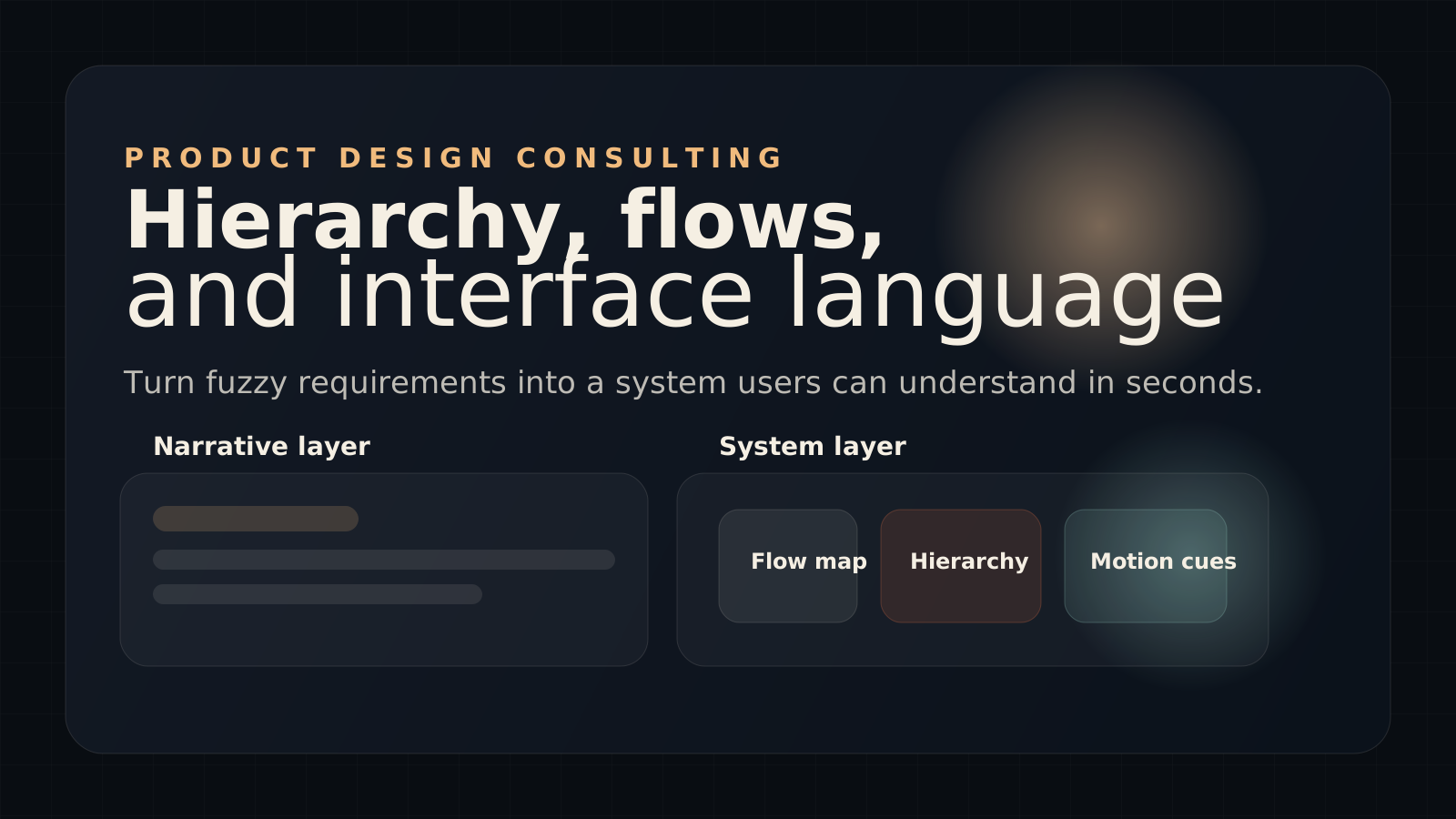
The work strengthens the narrative layer users read first and the system layer the team has to maintain after launch.
It is the right fit when the core offer is sound but the experience still feels generic, hard to use, or too inconsistent to support a credible launch.
Interfaces that grew quickly and now feel difficult to scan, explain, or extend.
New products that must feel deliberate and trustworthy before engineering locks in a weak design language.
Products where component behavior, responsive logic, and content hierarchy still live in improvisation.
Internal surfaces that slow people down because the interface hides state, priority, or decision value.
The output is a stronger experience system: clearer flows, better component logic, sharper visual hierarchy, and prototypes the team can use to make better product decisions.
Map the journey, critical tasks, screen relationships, and state changes before polishing details.
Define hierarchy, component rules, responsive behavior, and motion cues that help the surface stay coherent.
Turn the intended feel into something the team can review before engineering turns it into cost.
Reduce handoff friction by connecting design decisions to the implementation path earlier.
It sharpens the experience layer, but it should not be the first move if the offer itself is still unclear or the release path is already structurally broken.
Start with product strategy consulting so the UX is grounded in a real product decision.
Pair the work with app development consulting so the system survives delivery pressure.
The strongest wins usually come from clarifying hierarchy and task flow early enough that the product starts feeling easier to trust before the team scales more work on top of it.
A team preparing a release used product design consulting to improve hierarchy, reduce clutter, and tighten the conversion story.
An internal tool became easier to operate after state clarity, visual priority, and action paths were redesigned.
A product design consultant helps define UX architecture, interface hierarchy, component rules, and the system that makes a product easier to understand and easier to ship.
Product design consulting usually brings a more focused, decision-heavy engagement around UX and system quality rather than a large agency process. See the comparison guide.
Yes. That is often the highest-leverage timing because the system can be clarified before build cost compounds.
Continue to product design consulting vs. a design agency or the case studies page.
The strongest next steps are usually the related comparison guide, the case-study page, and then a brief describing where the UX is breaking down.