
Proof
What must the first release prove about demand, behavior, or workflow value?
Plan the MVP around proof, risk, and release sequence. The fastest MVP is not the one with the shortest feature list. It is the one that proves the right thing without carrying extra product debt into launch.
Last updated March 28, 2026
MVP planning gets expensive when the team confuses "small" with "strategic." The goal is a focused first version that teaches something meaningful and can still be shipped cleanly.
It should answer who the MVP is for, what proof the release must generate, what has to work reliably, and what can be excluded without breaking that proof.
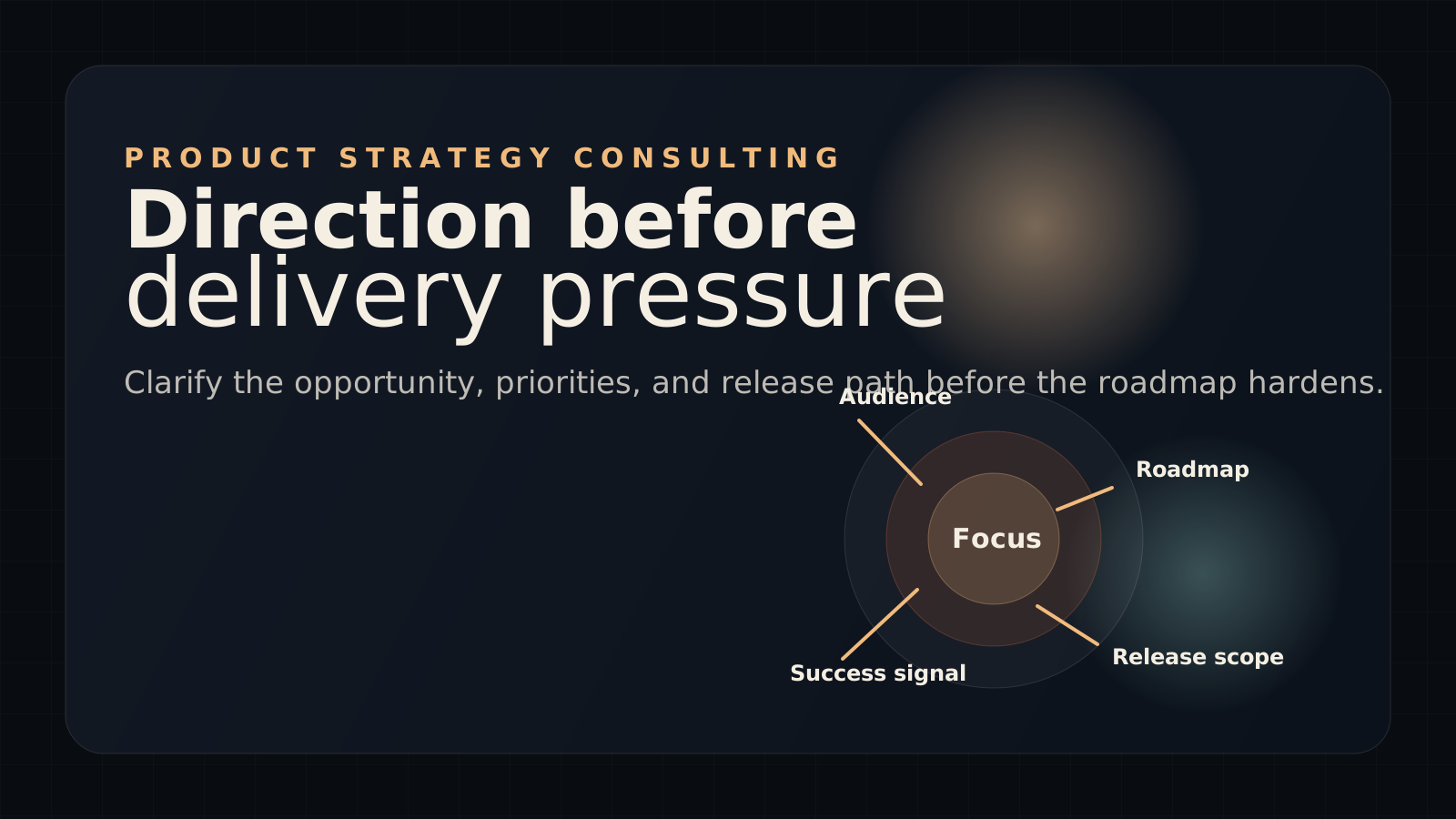
What must the first release prove about demand, behavior, or workflow value?
Which technical or UX assumptions are dangerous enough that they should be tested earlier?
What absolutely has to work on day one so the product feels trustworthy rather than fragile?
What can be delayed without weakening the core proof the launch is supposed to create?
| Include now | Usually wait |
|---|---|
| Core user path that proves the value | Edge-case features with low learning value |
| One strong workflow with clean completion states | Multiple secondary workflows that dilute focus |
| Enough UX polish to feel trustworthy | Decorative extras that do not change user confidence |
| Instrumentation or feedback hooks that teach you something | Nice-to-have breadth that creates more launch debt than insight |
Teams often optimize for stakeholder comfort instead of launch proof. That creates feature accumulation, weaker UX, and more engineering complexity before the product has earned it.
What is the one thing version one must prove to justify version two?
What would you cut immediately if the launch window moved two weeks earlier?
Yes, at least on the core path. Users still judge trust and clarity even in a first release.
As few as possible while still proving the key value and feeling credible to the intended user.
Usually product strategy should lead, with design and delivery input close behind so the scope stays realistic.
Continue to product strategy consulting, app development consulting, or the case studies page.
The best next steps are product strategy, app delivery planning, and a short brief describing what the first release is supposed to prove.