
Direction is still fluid
The product still needs strategy calls, not just task execution.
Start by matching the partner shape to the bottleneck. A studio consultancy, agency, freelancer, or internal team can all work. The right choice depends on whether the real problem is direction, UX quality, delivery capacity, or coordination load.
Last updated March 28, 2026
The mistake most teams make is hiring for apparent size or prestige instead of hiring for the kind of product decision they actually need help making.
Compare decision quality, process weight, speed of iteration, and how close the team needs the partner to stay to both strategy and implementation.
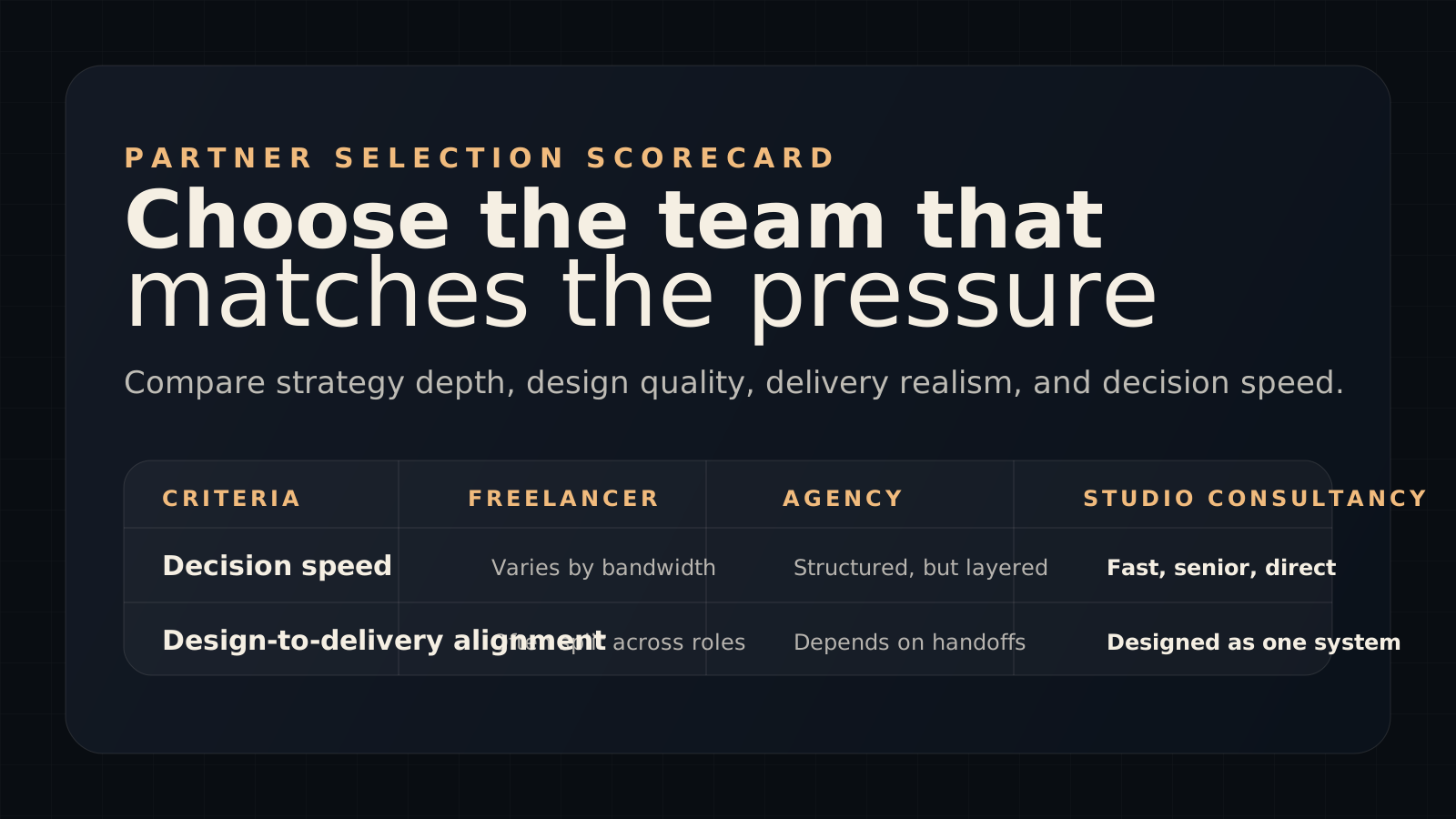
| Model | Best for | Tradeoff |
|---|---|---|
| Studio consultancy | Complex launches, pivots, and redesigns that need strategy, UX, and delivery judgment to stay connected. | Not the cheapest option if the work only needs narrow execution labor. |
| Design or dev agency | Broader production capacity, larger teams, and execution-heavy scopes with formal process. | Can add more coordination weight than a smaller decision-focused engagement needs. |
| Freelancer | Well-defined projects with a narrow specialty and strong internal direction already in place. | Usually depends on the client to supply more product and cross-functional leadership. |
| Internal team only | Organizations with clear direction, adequate senior capacity, and time to solve the problem themselves. | Internal blind spots and overloaded decision-makers can slow the product down. |
A compact consulting model is strongest when the team needs high-leverage decisions across multiple layers but does not need a large retainer-shaped apparatus around the work.
The product still needs strategy calls, not just task execution.
Design quality and implementation realism need to stay in the same conversation.
The team needs a smaller room with faster feedback loops and less approval drag.
The product needs clarity and judgment, not a swollen process footprint.
If the choice is mainly between product design consulting and a larger agency model, use the design-specific comparison next. If the issue is scope and sequencing, start with product strategy instead.
Continue to product design consulting vs. a design agency.
Continue to product strategy consulting or the case studies page.
Hire the model that matches the work. If you need more production capacity and formal process, an agency can fit. If you need sharper cross-functional decisions with less overhead, a consultancy is often stronger.
An external partner can still be useful when the team needs senior product judgment, temporary focus, or outside clarity.
Start with the bottleneck. Buy enough structure to solve that problem, but do not buy a larger delivery machine than the work requires.
Continue to the services hub, the case studies page, or the contact page.
Compare the service tracks, review the case patterns, and then bring the current bottleneck into a direct conversation.